

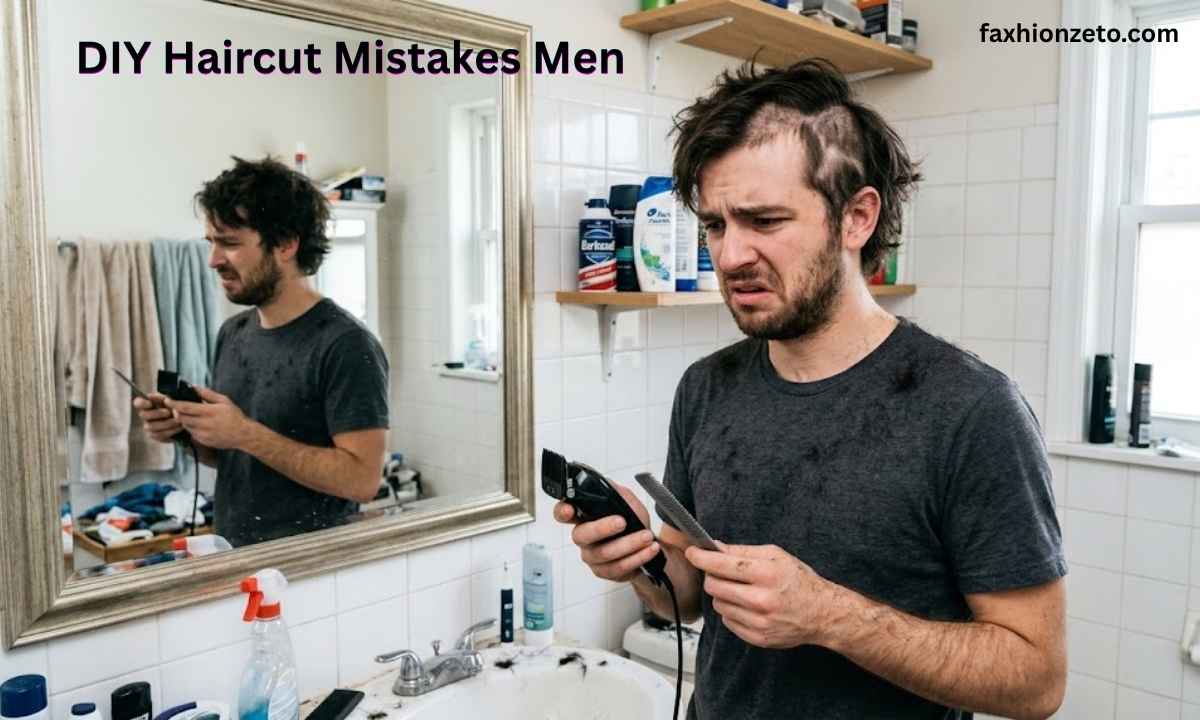
Cutting your own hair saves money and time. But one wrong move can leave you with a patchy, uneven mess. Most DIY haircut mistakes men make are easy to avoid once you know what to watch for. This guide covers the most common errors, from clipper guards to blending to hairlines. You will also learn how to fix a bad haircut and how to cut men’s hair at home with cleaner, calmer results.
Quick answer: The most common DIY haircut mistakes men make are using the wrong clipper guard, cutting too short too fast, skipping the blend, and ignoring the hairline. To avoid them, start with a longer guard, work in small sections, check your work often, and clean up the neckline last. If you slip, you can usually fix it with blending and patience.
Why DIY Haircut Mistakes Men Make Are So Common
Home haircuts look easy on video. Real life is different. You cannot see the back of your head. Your hands are not used to the angles. Clippers also cut fast, and hair takes weeks to grow back.
Most DIY haircut mistakes men make come from rushing, poor tools, or bad lighting. Men’s haircut mistakes at home tend to follow the same patterns. Beginner haircut mistakes are normal. Even barbers learned by making them.
The good news is that most common home haircut errors have simple fixes. A calm pace and a little prep go a long way.
Using the Wrong At-Home Haircut Tools
A kitchen scissor and a cheap trimmer will not give clean results. Choose tools made for hair. A basic kit for cutting men’s hair at home includes:
- A clipper with a full set of guards
- Sharp hair cutting shears
- A fine-tooth comb and a clipper comb
- A small detail trimmer for edges
- A handheld mirror and a wall mirror
- A cape or an old towel
Dull blades pull hair and leave rough edges. Clean and oil your clippers before each cut. You do not need pro gear to start. Just make sure the blades are sharp and the guards fit snugly.
Choosing the Wrong Clipper Guard
Many beginners mix up the numbers. A lower number means shorter hair. Picking the wrong clipper guard is one of the most common clipper mistakes. Here are typical men’s hair clipper guard sizes:
| Guard | Length | Common Use |
| #1 | 1/8 inch (3 mm) | Very short sides |
| #2 | 1/4 inch (6 mm) | Short, tidy sides |
| #3 | 3/8 inch (10 mm) | Classic short cut |
| #4 | 1/2 inch (13 mm) | Medium length |
| #6 | 3/4 inch (19 mm) | Longer top or sides |
| #8 | 1 inch (25 mm) | Top length |
Brands can vary, so check your set. Test a guard on a small spot at the back first. Start one size longer than you think you need. You can always go shorter. You cannot add hair back.
Cutting Wet vs. Dry Hair
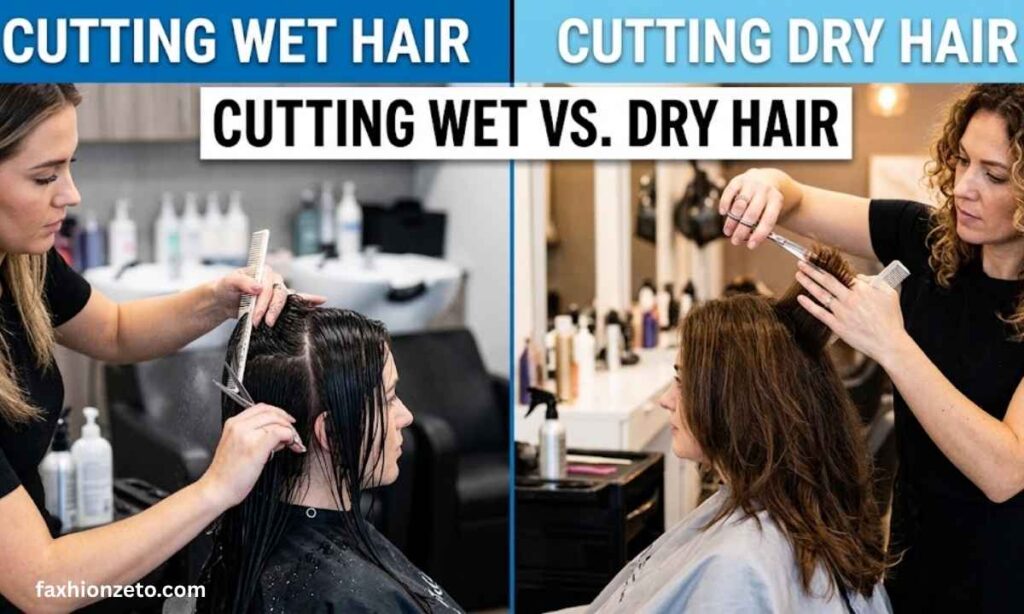
Wet hair stretches. Dry hair shows its real length. If you use clippers on wet hair, the cut can look much shorter once it dries. This matters most for wavy, curly, and coily hair, since it shrinks as it dries.
Clippers usually work best on clean, dry hair. Brush out tangles first. Heavy product can make clippers snag. Scissors can work on damp hair, but leave extra length to be safe. Fine hair can also look flatter when wet, so you may misjudge how thick it is. When in doubt, wait until your hair is fully dry.
Cutting Hair Too Short
Cutting hair too short is the mistake men regret most. It often happens when you pass over the same spot again and again. Or you pick a guard that is too low. To stay safe:
- Start with a longer guard.
- Make one pass, then check.
- Work in small sections.
- Step back and look from all angles.
If you already went too short, there is no quick cure. Hair grows slowly. Tidy the edges, add a little styling product for texture, and give it time. A hat for a few weeks is not a crime.
Skipping the Blend
Blending joins two lengths so there are no harsh lines. Skip it, and you get steps on the sides. Here is how to blend hair properly:
- Cut the sides with one guard.
- Switch to a longer guard and work up to the line where the lengths meet.
- Use a light, scooping motion away from the head.
- Lift hair with a comb and trim what sticks out.
- Check in bright light and repeat if needed.
Slow movements work best. Heavy pressure makes lines. These simple haircut blending techniques fix most stair-step looks.
DIY Fade Haircut Mistakes
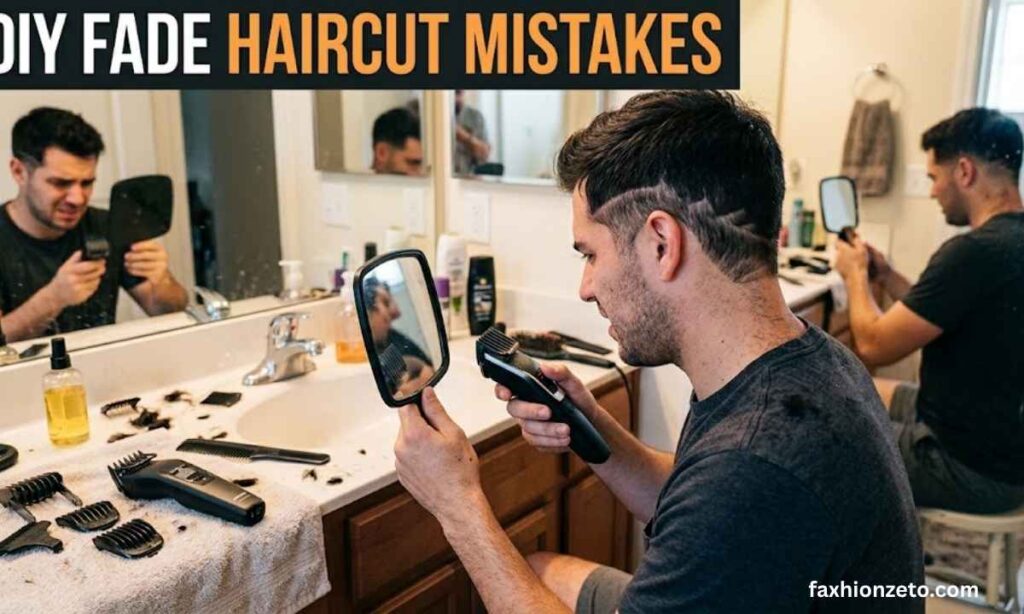
A fade is the hardest cut to do on yourself. Common DIY fade haircut mistakes include starting the fade too high, using too many guards, and fading one side more than the other. Try these tips:
- Pick your fade height first and mark it with a comb.
- Use only two or three guards.
- Work from the longest guard to the shortest.
- Compare both sides often.
A taper is more forgiving than a skin fade. It leaves more length and shows fewer errors. Many beginners do better with a simple taper before trying a full fade.
Uneven Hairline Mistakes
Your hairline frames your face. Small errors show fast. Men often cut too high above the ears or push the front edge too far back. Many also try for a razor-sharp line and end up with a crooked one.
Go easy. Follow your natural hairline instead of forcing a new one. Hold the trimmer steady and use short strokes. Take off a little at a time. Hairlines differ from man to man. Some have a widow’s peak or a receding hairline. A natural edge looks better than a sharp edge in the wrong place. If you feel unsure, leave the front alone.
Messing Up Sideburns
Sideburns should match. Uneven ones draw the eye right away. Common errors include different lengths, different shapes, and cutting them too high. Use these steps:
- Stand square to the mirror and keep your head level.
- Pick a spot to end them, such as the middle of the ear.
- Use a comb as a guide for the bottom edge.
- Compare both sides after each pass.
Work one side, then the other, in small steps. If one side ends up shorter, trim the other to match. Then clean up the edges lightly.
How to Trim the Neckline
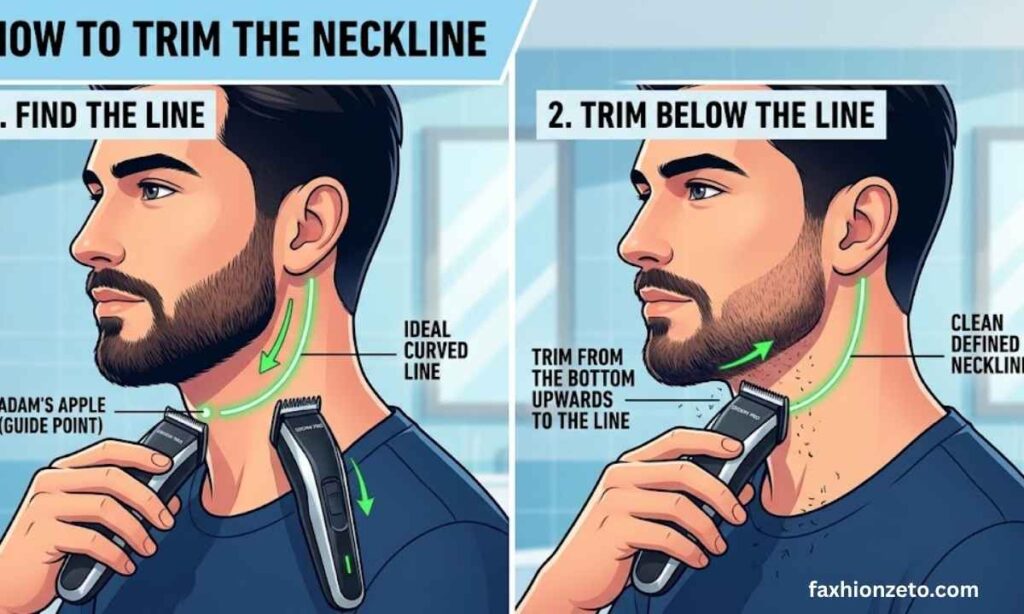
The neckline is hard to see, so many men leave it crooked. Two common mistakes are cutting it too high and picking the wrong shape. A natural neckline follows your hair growth. A blocked neckline is straight across. A tapered neckline fades out softly.
Beginners often do best with a natural or tapered neckline. Both hide small errors. Use a handheld mirror and a wall mirror to check the back. Trim only the stray hairs below the line. Do not carve a new one. If you can, ask a friend to check the shape.
Ignoring Hair Type and Texture
One method does not fit every head. Straight hair shows lines clearly. Wavy and curly hair can hide small errors, but it shrinks as it dries. Coily hair needs extra care so you do not cut too short.
Density matters too. Fine hair can look thin if you cut it too close. Thick hair may puff out if you leave the sides too long. Watch for cowlicks. Hair there grows in a different direction and can stick up when cut short. Match the style to your hair, not just to a photo.
Poor Lighting and a Bad Setup
A weak setup leads to weak cuts. Cut in bright light and sit in front of a large mirror. Use a second mirror to see the back. Lay a towel on the floor for easy cleanup. Keep your comb, guards, and clipper oil within reach.
Mood matters too. Rushing before a date or a job interview is a recipe for trouble. Pick a calm time with no deadline. Also check that your clippers are charged or plugged in. A dead battery halfway through is a classic problem.
How to Fix a Bad Men’s Haircut
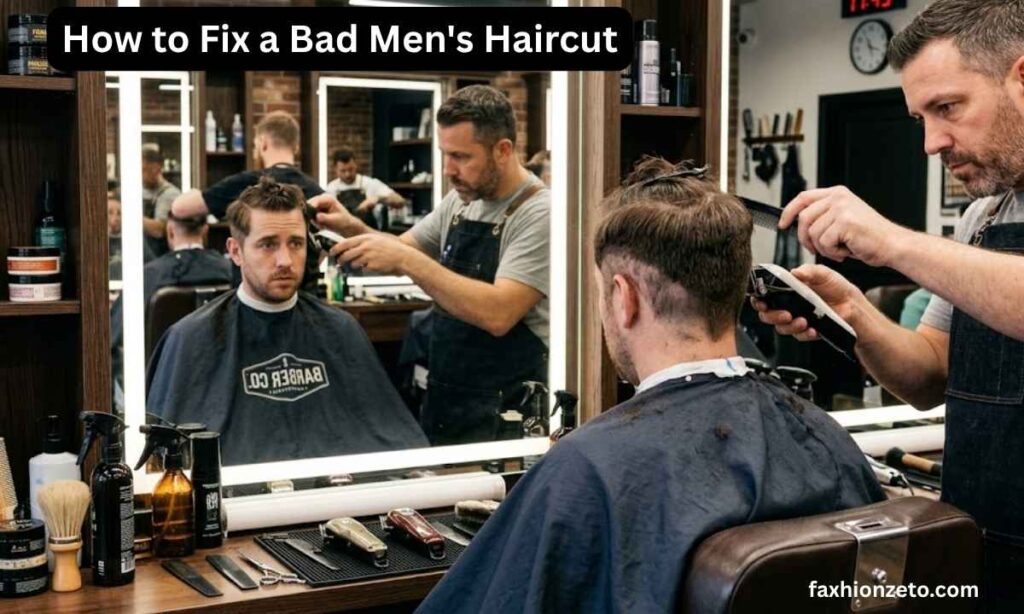
Most DIY haircut mistakes men make can be fixed with a little patience. Stay calm and stop cutting for a minute. Look at the damage in good light before you touch the clippers again.
Fix Uneven Sides
Find the longer side. Trim it a little at a time with the same guard. Stop when both sides match, then blend again. Do not try to fix everything in one pass. This uneven haircut fix works best in small steps.
Fix a Cut That Is Too Short
There is no quick cure. Tidy the edges and style the top with a light product for texture. Then wait for your hair to grow.
Know When to See a Barber
If the fade or hairline is far off, a barber can often reset the shape. Be honest about what happened. They have seen it before.
Tips for a Clean DIY Haircut
Avoiding DIY haircut mistakes men often repeat comes down to good habits. Think of this as a simple men’s self haircut guide you can use each time:
- Start with clean, dry, detangled hair.
- Begin with a longer guard.
- Work in small sections.
- Check both sides often.
- Do the edges and neckline last.
- Clean your tools after each cut.
- Take a photo of the result to learn what to change next time.
Practice on the sides and back before you cut the top. Your skills build with each cut. These DIY men’s haircut tips will help you avoid the most common haircut mistakes to avoid and keep your results clean.
FAQs
What are the most common DIY haircut mistakes for men?
The biggest ones are using the wrong clipper guard, cutting too short, skipping the blend, and rushing the hairline. Poor lighting and dull tools also cause trouble. Most of these are easy to avoid with a slow pace.
Should I cut my hair wet or dry?
For clippers, dry hair is usually best because you can see the true length. Scissors can work on damp hair, but leave extra length. Hair shrinks as it dries, especially if it is wavy or curly.
What clipper guard should a beginner use?
Start with a longer guard, such as a #4 or higher, and work down. Test it on a small spot at the back. Go shorter only when you feel sure.
How do I fix an uneven haircut at home?
Find the longer side and trim it a little at a time. Then blend where the lengths meet. Use bright light and check often. If the shape is far off, see a barber.
Can I give myself a fade?
Yes, but it is hard. Start with a simple taper. Use a few guards, work slowly, and compare both sides. A full skin fade takes practice.
Conclusion
Cutting your own hair takes patience, not talent. Most DIY haircut mistakes men run into come from rushing, short guards, and poor setup. Use the right tools, start longer, and check your work often. Blend with care and leave the hairline natural. If something goes wrong, small fixes and time can save the look. With practice, you will learn how your hair behaves and get cleaner results at home. And when it is too tricky, a barber is always a smart backup.

Isaac Flynn is a fashion writer and content researcher at Faxhionzeto.com. He focuses on fashion trends, styling ideas, clothing guides, and modern wardrobe inspiration. With an interest in visual culture and fashion journalism, Isaac creates practical, reader focused articles that turn evolving style ideas into clear, useful information for everyday fashion enthusiasts.