

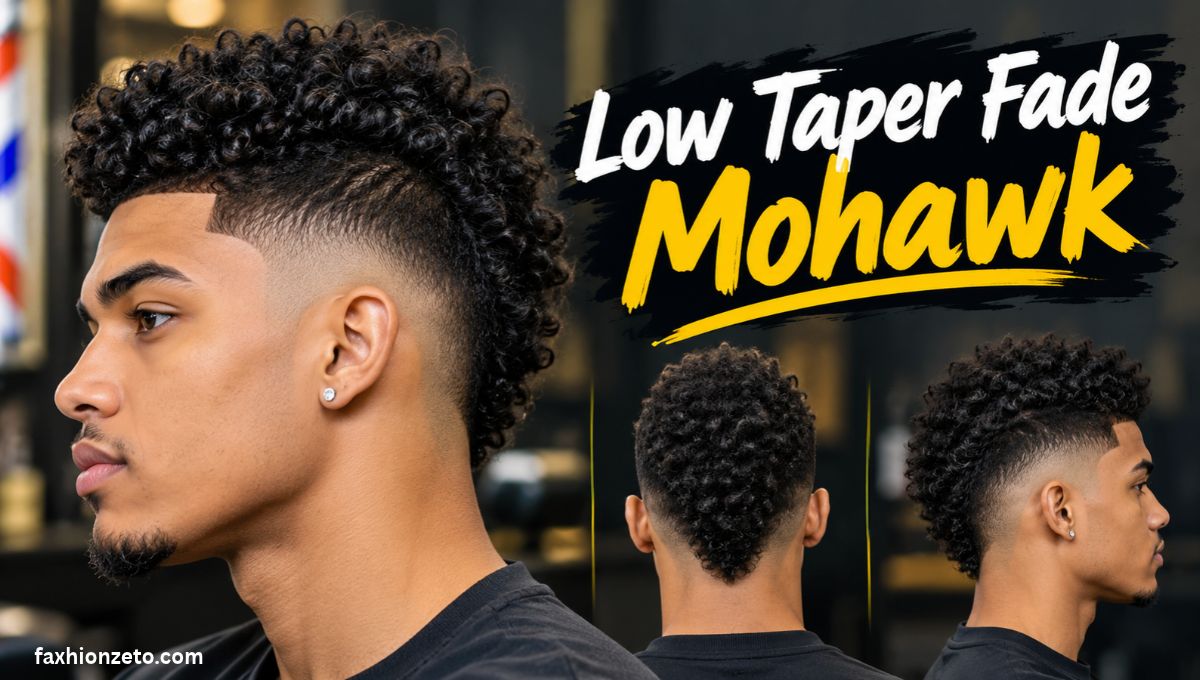
A low taper fade mohawk mixes a soft, clean fade with a bold strip of longer hair down the middle. It looks sharp and modern. It also feels easier to wear than a classic punk mohawk. The low taper keeps the sides neat near the ears and neckline, so the strip gets all the attention.
This guide shows you how the cut works and which styles to try, from subtle to bold. Every tip is easy to use. You will learn how to match the look to your hair type, face shape, and daily routine. You will also get a simple barber script, easy styling steps, and care tips for razor bumps and grow out. Read it before your next visit, and you will walk out with the cut you had in mind.
What Is a Low Taper Fade Mohawk?
A low taper fade mohawk is a haircut with short, tapered sides and a longer center strip. The taper starts low, near the ears and neckline. The hair on top stays longer and runs from the front hairline to the back of the head.
Think of it as two parts. The sides are neat and subtle. The middle is the star. Because the fade sits low, the cut feels clean without looking extreme.
Where Does the Low Taper Start and End?
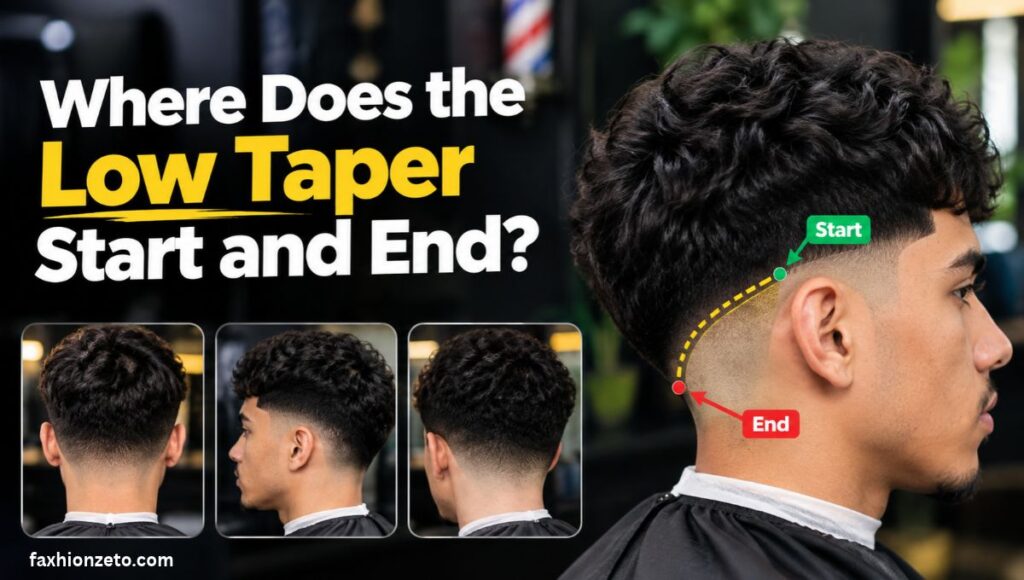
A low taper starts near the natural hairline. It wraps around the ears and fades down the sideburns. It then follows the neckline at the back.
Here is the basic path:
- The shortest length sits right at the edge of the hairline.
- The hair grows slowly longer as it moves up the sides.
- The blend ends at or just above the ear line.
- The fade then meets the longer hair on the sides of the strip.
This gradual fade blend is what sets a taper apart. The change in length is soft. You do not get a harsh line.
Some men ask for a skin level finish at the very bottom. Others keep a little length for a softer look. Both work. It depends on how much contrast you want.
How the Center Strip Defines a Mohawk
The center strip is the heart of the cut. It is the longer hair down the middle of your head. Its width and length shape the whole look.
A wide strip feels relaxed and wearable. A narrow strip feels bold and edgy. Most men land somewhere in the middle.
The strip usually starts at the front hairline. It runs back over the crown. It can end at the nape or stop at the crown. Where it ends changes the style, and we will cover that in the mullet section.
Low Taper Fade vs. Traditional Mohawk
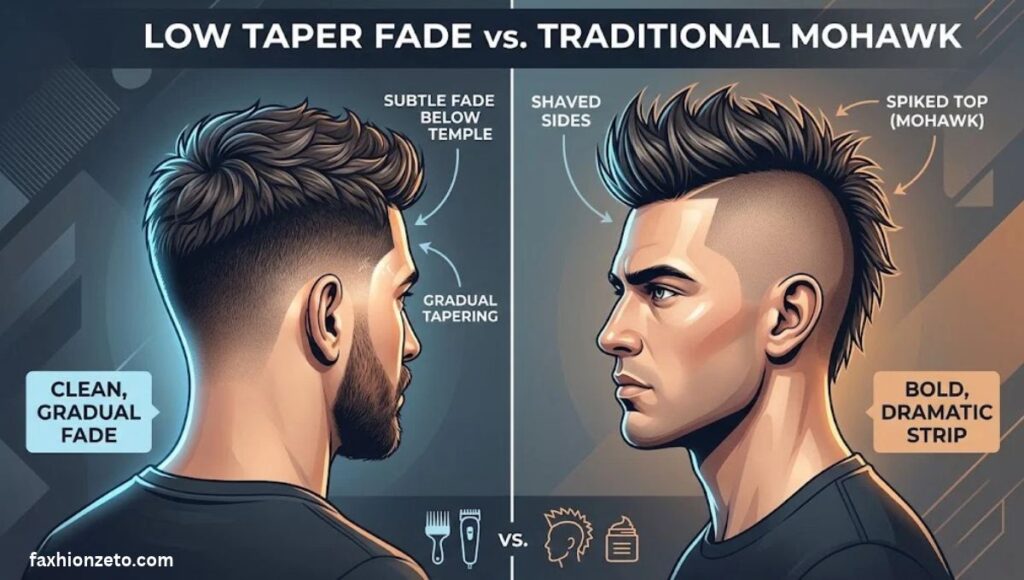
A traditional mohawk often has shaved sides. The contrast is sharp. The strip stands tall, and the sides can look bare.
A low taper fade mohawk is softer. The sides keep some hair. The fade is gradual. The whole cut looks more polished.
Here is a quick comparison:
- Traditional mohawk: Very short or shaved sides. High contrast. Strong punk roots.
- Low taper fade mohawk: Tapered sides. Low contrast near the ears. Easier to wear at work and school.
If you want a mohawk but fear it is too loud, the low taper version is a smart place to start.
The cut also has a long history. Mohawk style hair has roots in several cultures, and it became a symbol of the punk scene in the 1970s and 80s. Today the modern mohawk hairstyles for men look very different. They lean on soft fades, clean lines, and natural texture. The low taper is a big reason why the style now fits so many everyday settings.
Best Low Taper Fade Mohawk Styles for Men
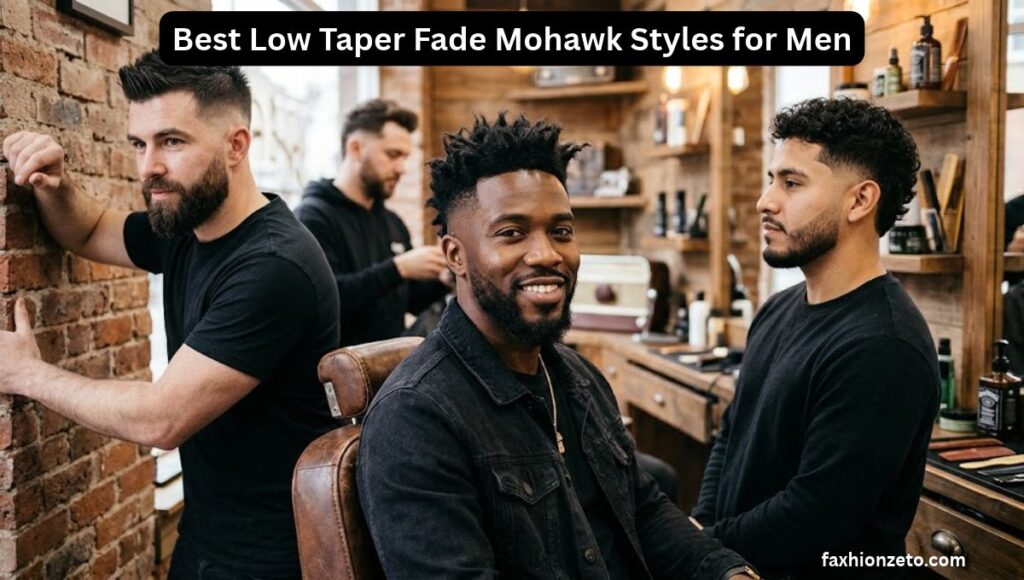
There is no single way to wear this cut. Below are six popular looks. Each one fits a different taste and hair type.
Classic Textured Low Taper Mohawk
This is the go to version. The sides are tapered low. The top is cut with layers and styled with texture.
A barber often uses point cutting on the strip. This adds movement and keeps the top from looking flat. You then style it with matte clay for a natural finish.
This look suits straight and wavy hair. It also works well on thick hair that holds shape.
Read More: Low Taper Fade for Boys With Straight Hair
Curly and Coily Low Taper Frohawk
A frohawk is a mohawk built from natural curls or coils. The low taper keeps the sides tidy while the top shows off volume.
The curl pattern does the work here. You do not need to flatten it. You want to define it and let it rise.
Curl cream and a good leave in conditioner help the strip look full and bouncy. A rounded shape on top looks great against crisp, tapered sides. Many Black men choose this look because it highlights natural texture.
Short and Subtle Mohawk Fade
Not ready for a tall strip? Try a short version. The hair on top is only a little longer than the sides.
This style is easy to live with. It needs little product. It looks neat at the office, in class, and at family events.
A short low taper mohawk is also a smart first step. You can grow the strip out later if you like the shape.
Low Taper Mohawk with a Mullet
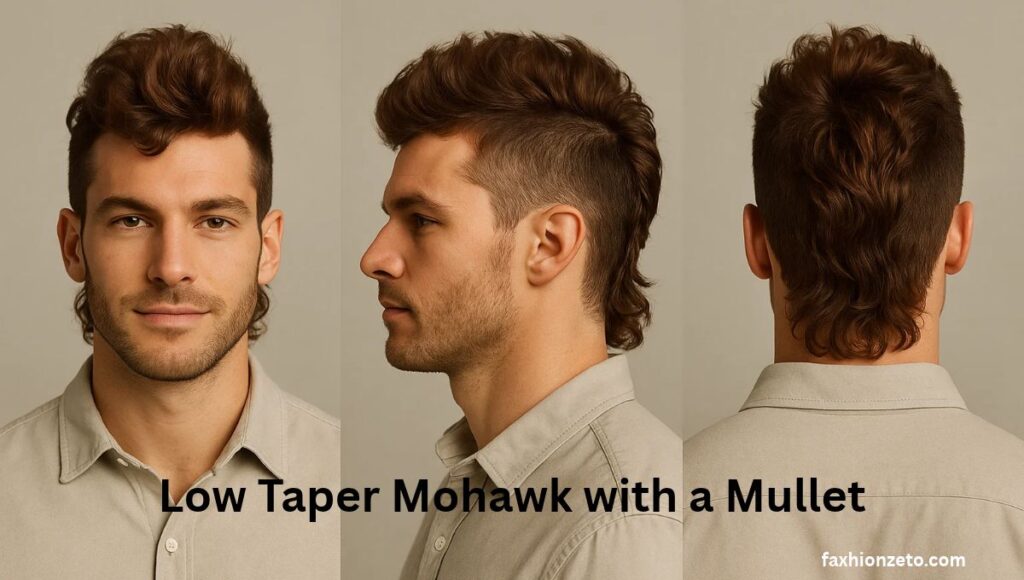
This style mixes a mohawk strip with a longer nape. The hair on top flows back and lengthens at the neck. The sides stay tapered and clean.
The result feels modern and bold. It has a touch of retro, too. An extended nape gives the cut a strong back view.
Talk with your barber about how long the back should be. A few inches is plenty to get the effect.
Low Taper Mohawk with a V-Shaped Neckline
A V-shaped neckline points down at the center of the nape. It makes the back of the haircut look sharp and intentional.
It pairs well with a mohawk because the strip leads your eye straight down the back. The V finishes the shape.
A squared or rounded neckline is the other common choice. Square looks bold. Round looks soft. The V sits in between and often grows out in a neat way.
Low Taper Mohawk with Shaved Designs
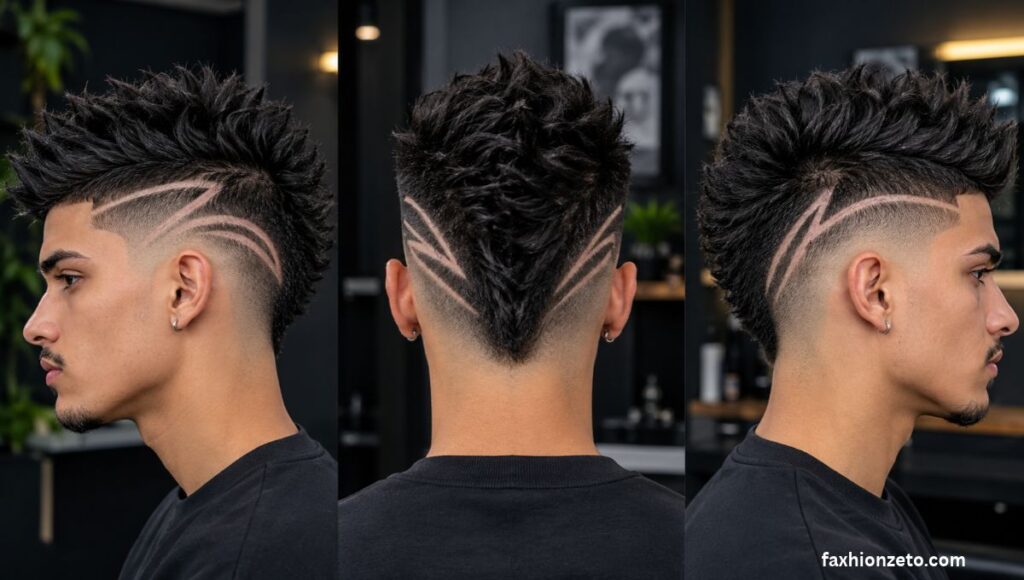
Some men add a design on the sides. This can be a few lines, a part, or a small pattern. The tapered sides give your barber a clean canvas.
Keep the design simple at first. Fine lines look sharp and fade out well. Large designs need more upkeep and a skilled hand.
A low taper fade with design suits men who want something personal. Just remember that designs blur as hair grows. Plan on regular visits.
How to Choose a Mohawk for Your Hair Type
Your hair type shapes how the strip behaves. Pick a style that works with your natural pattern, not against it.
Low Taper Fade Mohawk for Straight Hair
Straight hair gives you a smooth, sleek strip. It shows the taper very clearly. It also shows mistakes, so a skilled barber matters.
Straight hair can fall flat. To avoid this, ask for layers on top. Use a texturizing product or hair fiber to add grip.
Blow dry the strip upward with your fingers. Then lock the shape with a matte clay.
Low Taper Fade Mohawk for Wavy Hair

Wavy hair is the easiest to style. It has built in texture and body. The strip holds shape with little effort.
Let your waves show. A light cream or sea salt spray can boost your natural pattern. You get an effortless, lived in look.
Medium length on top often works best. It gives you enough hair to shape without weighing waves down.
Low Taper Fade Mohawk for Curly Hair
Curly hair adds fullness. The strip can look thick and bold. Tapered sides keep that volume balanced.
Curls need moisture. Use a curl defining cream on damp hair. Let it dry naturally or use a diffuser on low heat.
Ask your barber to cut the top while it is dry. That way they can see how your curls fall. It helps them avoid cutting too short.
Low Taper Frohawk for Black Men
A low taper frohawk is a strong choice for coily and afro textured hair. The taper highlights the shape of the strip. The curls give the top real height.
A few tips help here:
- Keep the strip moisturized. Dry coils break easily.
- Use a pick or wide tooth comb to lift the shape.
- Protect your hair at night with a satin cap or bonnet.
- Ask for a clean line up so the strip looks sharp.
Many barbers who work with natural hair know how to shape a round, even frohawk. Look at their past work before you book.
Choosing the Right Strip Width and Top Length
Strip width changes your whole look. Here is a simple guide:
- Narrow strip (about 1 to 2 inches): Bold and edgy. Best for strong jawlines.
- Medium strip (about 2 to 3 inches): Balanced. Works on most head shapes.
- Wide strip (3 inches or more): Soft and easy. Good for rounder faces and thinner hair.
Top length matters too. Short tops (1 to 2 inches) are easy to manage. Medium tops (3 to 4 inches) can be styled up or back. Long tops need more time but give you more choices.
If you are unsure, start wider and longer. You can always cut more later.
Also check your hair growth patterns. A cowlick at the front hairline can push the strip to one side. A strong crown swirl can split the strip at the back. Tell your barber about both before the cut. They can leave a little extra length in those spots or place the strip to work with the way your hair grows. This one step can save you a lot of daily frustration.
Best Options for Thin Hair and a Receding Hairline
Thin hair can still work for this cut. You just need smart choices.
- Pick a medium or wide strip so the top looks fuller.
- Keep the top short to medium. Long thin hair looks sparse.
- Use a fiber product to fill in gaps.
- Ask for a softer taper so the contrast is not too high.
For a receding hairline, a mohawk can actually help. The strip draws the eye to the center. A slightly forward front can soften the corners.
If your hair is thinning fast, talk to your barber or a doctor. A short, clean style often looks best.
Low Taper Mohawk vs. Other Fade Haircuts
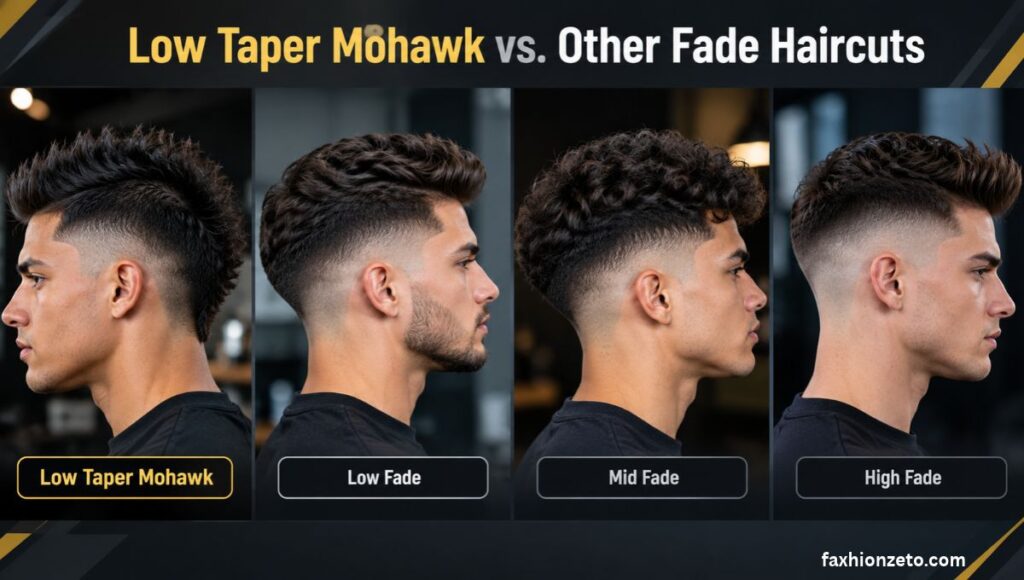
Many fades sound alike. Here is how the low taper fade mohawk compares to its close cousins.
Low Taper Mohawk vs. Burst Fade Mohawk
A burst fade curves around the ear in a half circle. It leaves longer hair at the back. A burst fade mohawk has a rounder, more dramatic shape.
A low taper is subtler. It follows the natural hairline and does not make a big curve.
Choose the burst if you want more contrast. Choose the taper if you want a cleaner, quieter look.
Mohawk Fade vs. Faux Hawk Fade
A mohawk has a clear strip with clean sides. A faux hawk has a softer top. The hair is pushed up in the center but the sides stay longer.
The faux hawk fade is easier to wear. It looks less bold. A true mohawk fade has more contrast and a more defined strip.
Low Taper vs. Low Skin Fade Mohawk
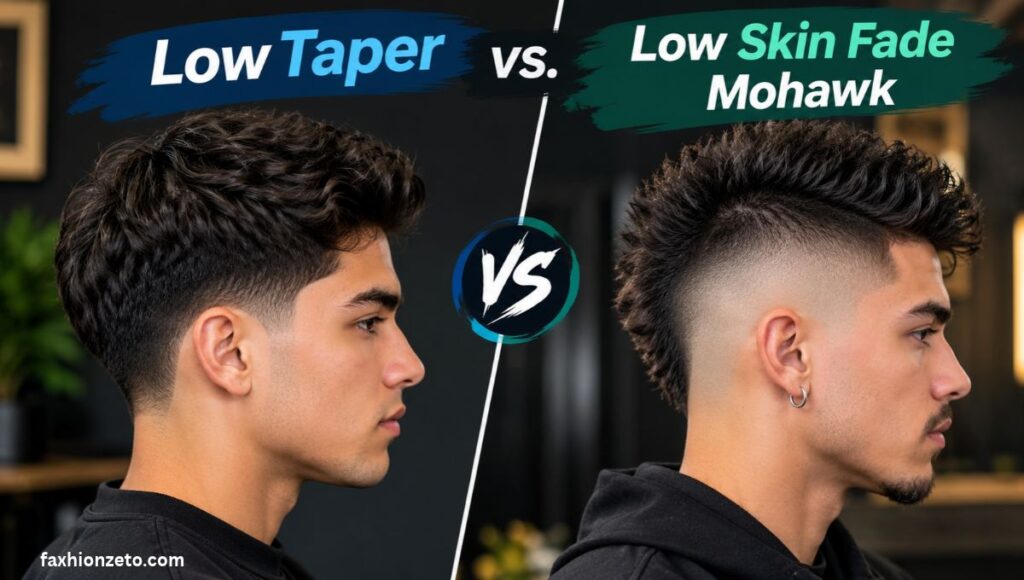
Both start low. The difference is the finish.
A low taper keeps a little length at the edge. The look is soft. A low skin fade goes all the way down to bare skin. The look is sharper.
Skin fades need touch ups more often. Tapers grow out more gently.
Low Taper vs. High Taper Fade Mohawk
Height is the main change. A high taper climbs well above the ears. It makes a stronger statement. A low taper stays near the hairline.
A low taper fade mohawk feels safer for work and school. A high taper version feels more daring.
You can also pick a mid option. A low fade vs mid taper choice often comes down to how much of the sides you want to show.
Mohawk Mullet vs. Drop Fade Mullet
A mohawk mullet keeps a strip on top that flows into a longer back. A drop fade mullet follows a curve that dips behind the ear.
The drop fade shape is rounder and sits lower at the back. The mohawk mullet has a stronger center line. Show your barber pictures to be sure you get the right one.
Does a Low Taper Fade Mohawk Suit Your Lifestyle?

A haircut should fit your life, not just your mirror. Ask yourself a few questions before you commit.
Choosing a Style for Your Face and Head Shape
Face shape and head shape guide the best strip width and height.
- Oval face: Most strip widths work. You have the most freedom.
- Round face: A taller, narrower strip adds length. Keep the sides tight.
- Square face: A softer, medium strip balances strong angles.
- Long face: Keep the top shorter. Too much height makes the face look longer.
- Heart shaped face: A medium strip with a little weight at the front balances the chin.
Head shape matters, too. Flat spots and bumps show more when the sides are short. A good barber will adjust the fade to hide them.
Is It Suitable for Work, School, and Everyday Wear?
Yes, in most cases. A short, textured version looks neat in a professional setting. A subtle strip with low contrast can pass in most offices.
Bolder versions may stand out more. Check your school or workplace rules if you are not sure. A medium strip with a gentle taper is a safe pick for nearly everywhere.
A professional mohawk hairstyle is all about control. Keep the top tidy and the neckline clean.
How Much Hair Length Do You Need?
You do not need very long hair. You need enough on top to make a visible strip.
As a rule, aim for at least 2 to 3 inches on top. Curly and coily hair can look good a bit shorter because curls add height. Straight hair usually needs more length to stand up.
If your hair is shorter, ask your barber what is possible. They can often shape a subtle strip with what you have.
Hair texture and density matter as much as length. Thick hair holds a strip well and looks full. Fine hair can lie flat and needs more help from products. Dense, coily hair gains height on its own. Think about both your texture and your density when you decide how long to grow the top.
How to Explain Your Desired Mohawk to a Barber
Most bad haircuts come from poor communication. A clear plan fixes that. Use the steps below.
Choose the Fade Height and Shortest Length
Tell your barber where the fade should start. For this cut, say low. Then say how short you want it at the bottom.
You can name a clipper guard number or use words like skin level or soft finish. Words like soft taper blend help, too.
Decide on the Center Strip Width
Show the width with your fingers. Hold them up against your head. Say the number of inches if you can.
This tiny step prevents the most common mistake. Many men leave the shop with a strip that is too thin.
Bring Front, Side, and Back Reference Photos
Photos are your best tool. Bring pictures from three angles: front, side, and back.
Pick photos of hair that looks like yours. A style on straight hair will not look the same on coily hair. Tell your barber what you like in each picture.
Discuss the Neckline, Line-Up, and Beard Blend
Do not forget the finishing details. Ask about these:
- Neckline: Squared, rounded, or V shaped.
- Line up: Sharp edge up or a natural hairline.
- Beard blend: Should the beard fade into the sideburns?
A low taper mohawk with beard can look great. The taper should flow into the beard so there is no gap.
Barber Script for a Low Taper Fade Mohawk
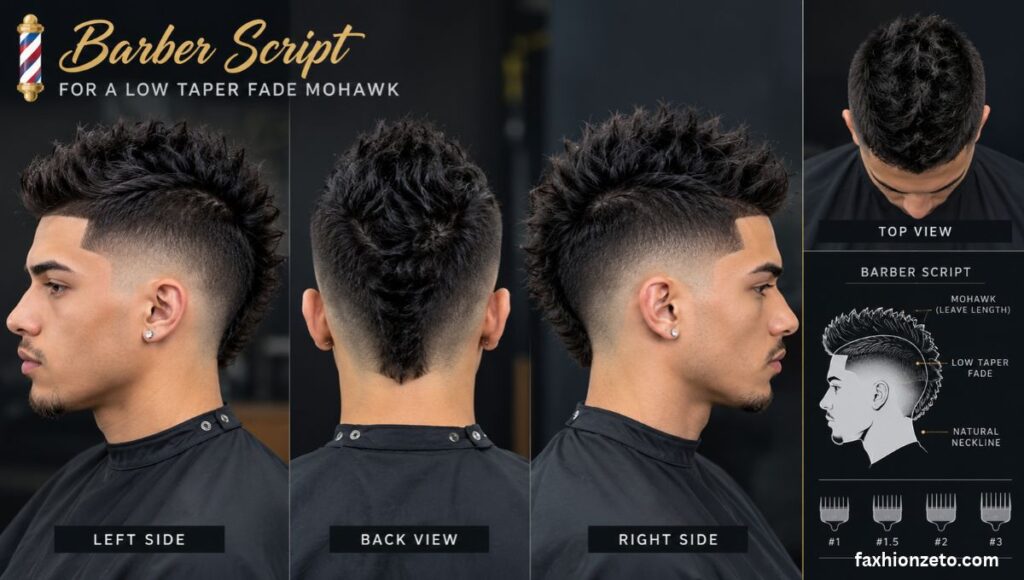
Here is a script you can read or adapt:
“I would like a low taper fade mohawk. Start the taper low around the ears and neckline, and keep it soft. Leave about 3 inches on top with a medium strip. Add some texture so I can style it. Please finish the back with a V shaped neckline. Here are photos from the front, side, and back.”
Ask the barber to repeat the plan back to you. If something sounds off, speak up before the clippers start.
Clipper guard settings can also help the conversation. A low taper often starts with a very short guard at the edge, then moves up to longer guards as the hair climbs the sides. Your barber will choose the exact numbers based on your hair and your goal. You do not need to know them. You only need to describe the look you want and the starting point of the fade.
How to Style a Low Taper Fade Mohawk
Styling takes only a few minutes once you know the steps. Here is how to do it for each hair type.
Styling Straight and Wavy Hair
- Start with towel dried hair.
- Apply a light mousse or sea salt spray at the roots.
- Blow dry the strip upward, lifting at the roots.
- Rub a small amount of matte clay between your palms.
- Push the hair up and slightly back with your fingers.
- Shape the sides of the strip so the edges stay clean.
Less is more. Too much product weighs hair down and ruins the shape.
Styling Curly and Coily Hair
- Wash and condition your hair.
- Leave it damp and apply curl cream or leave in conditioner.
- Shape the strip with your fingers or a pick.
- Let it air dry or use a diffuser.
- Fluff the top gently once it is dry.
- Use a light oil on the tapered sides if skin feels dry.
Do not brush curls when dry. This can cause frizz and break the pattern.
Best Products for Texture, Volume, and Hold
Pick products by your goal.
- Matte clay for hair: Strong hold and no shine. Great for texture.
- Hair fiber styling product: Adds thickness for thin hair.
- Sea salt spray: Gives light grip and a beachy feel.
- Curl defining cream: Shapes curls and fights frizz.
- Leave in conditioner: Keeps dry hair soft and strong.
- Light hairspray: Locks the shape without making it stiff.
A small amount goes a long way. Start with a pea sized dab and add more only if you need it.
How to Create Height Without Flattening the Strip
Height is the hardest part. These tips help:
- Lift hair at the roots while blow drying.
- Point the dryer in the direction you want the hair to go.
- Use a pick or comb to raise the hair, not press it.
- Add product in thin layers instead of one big glob.
- Finish with a quick blast of cool air to set the shape.
Heavy gels and pomades can weigh the strip down. Lighter products keep it airy.
Direction matters too. Styling the hair straight up gives you a tall, bold strip. Styling it up and slightly back gives you a smoother, more relaxed shape. Try both on a day off to see which one you like. Take a photo of the one that works so you can repeat it on busy mornings.
Low Taper Mohawk Maintenance and Scalp Care

A clean fade fades fast. A little routine keeps the cut looking fresh.
When to Get a Taper Fade Touch-Up
Most men need a touch up every 2 to 3 weeks. Skin finishes may need it sooner. Softer tapers can stretch to 4 weeks.
Watch for these signs:
- The fade line looks blurry.
- The neckline has grown fuzzy.
- The strip has lost its shape.
- The sides feel bulky around the ears.
The low taper fade mohawk grows out slowly because the fade is soft. That helps if you cannot visit often.
Washing and Conditioning Your Hair
Wash your hair 2 to 3 times a week for most hair types. Wash less if your hair is curly or coily, since those types dry out faster.
Use a gentle shampoo. Follow with conditioner on the strip. Rinse well so no residue stays on the scalp.
A healthy scalp helps hair grow thick. Do not skip it.
Preventing Heat Damage and Scalp Irritation
Heat can dry out hair and weaken it. Keep these habits in mind:
- Use a heat protectant before blow drying.
- Keep the dryer on medium heat.
- Hold the dryer a few inches away from your head.
- Avoid daily hot styling when you can.
Close clipping can leave the scalp tender. Use a mild, alcohol free moisturizer on the sides. If you feel itchy or see redness, switch products and give your skin a break.
How to Avoid Razor Bumps Around the Neckline
Razor bumps happen when short hairs curl back into the skin. They are common after close clipping, especially with curly hair.
Try these steps:
- Ask your barber to clip with the grain at the neckline.
- Use a warm towel before the cut to soften the skin.
- Apply a soothing aftershave or balm afterward.
- Do not pick or scratch the area.
- Gently exfoliate once or twice a week.
If bumps keep coming back or look painful, see a doctor or dermatologist.
Keeping the Mohawk Shape Defined Between Visits
You can protect your shape at home.
- Brush the sides gently to keep them smooth.
- Trim stray hairs with a small trimmer if you have the skills.
- Do not cut the strip yourself.
- Sleep on a satin pillowcase to reduce frizz.
- Restyle each morning with a small amount of product.
A clean shape between cuts makes the style last longer.
If you wear a beard, plan for it. A beard and sideburn blend should flow right out of the taper with no hard break. Keep the cheek line neat and trim the beard on a regular schedule. When the beard and the fade match in tone and length, the whole cut looks balanced. When they clash, even a great fade can look off.
Common Mohawk Mistakes and Grow-Out Tips
Even a great idea can go wrong. Avoid these traps.
Making the Center Strip Too Narrow or Too Wide
A strip that is too thin looks harsh. A strip that is too wide looks like a regular haircut with short sides.
Use your fingers to mark the width before the cut. Compare it to your reference photos. Aim for a width that balances your face and head shape.
Fixing Uneven Fades and Overgrown Edges
Uneven fades happen when the blend is rushed or the clipper settings are off. They can also show up as hair grows at different speeds.
To fix them, go back to your barber. Most will adjust a bad blend within a few days. For overgrown edges, a quick edge up and neckline clean up often brings the shape back.
Do not try to fix a fade line at home with scissors. You can make it worse.
What to Expect During the Grow-Out Stage
Growing out a mohawk takes patience. In the first few weeks, the sides fill in and the strip loses definition. After a month or two, the shape looks shaggy.
Ask for a trim of the sides every few weeks as the hair grows. This keeps the style neat and helps the whole head grow evenly. After about 3 to 4 months, you will have enough length for a new style.
A gradual grow out is easier on low tapers than on high contrast cuts.
Low-Maintenance Alternatives to a Mohawk Fade
If the upkeep feels like too much, try one of these:
- Textured crop: Short, messy top with a low taper.
- Undercut quiff: Longer top swept up and back.
- Modern Caesar haircut: Short, forward top with a clean taper.
- Low taper with a side part: Classic and easy.
These keep the clean sides but need less styling.
No matter which way you go, the best haircut is the one you can keep up. Be honest about how much time you have each morning. A cut that you style in two minutes will always look better than a complex cut you skip. If you love the mohawk look but not the work, choose a short strip and a soft taper. You still get the shape, with far less effort.
Frequently Asked Questions About Low Taper Fade Mohawks
How Long Should the Hair on Top Be?
Aim for 2 to 4 inches. Short curls can work with less, and straight hair may need more.
Can You Wear a Mohawk Without Daily Styling?
Yes. A short, textured version needs only a quick finger comb and a little product.
Is a Low Taper Fade Mohawk Attractive?
Many people find it sharp and stylish. Looks are personal, so pick a version that suits your face and style.
What Is the Difference Between a Low Fade and a Taper?
A low fade can go down to skin and sits near the ear line. A taper leaves a little length and blends more softly.
Is a Drop Fade Considered a Mohawk?
No. A drop fade is a fade shape. It can be paired with a mohawk, but it is not a mohawk on its own.
How Long Does a Low Taper Fade Mohawk Take to Grow Out?
It takes about 3 to 4 months to grow out fully, depending on your growth rate.
Can You Maintain a Fade at Home?
You can tidy the neckline and sides with a trimmer. Leave the blend and the strip to a barber.
What Should You Do About Bumps After Close Clipping?
Keep the area clean, apply a soothing balm, and avoid picking. See a doctor if bumps persist.
Conclusion
A low taper fade mohawk gives you a bold look with a clean, soft finish. It suits many hair types, from straight to coily. With the right strip width, a clear plan for your barber, and a simple care routine, you can wear it with confidence. Start with reference photos, pick a style that fits your life, and keep up with touch ups. Your next cut can be your best one yet.

Isaac Flynn is a fashion writer and content researcher at Faxhionzeto.com. He focuses on fashion trends, styling ideas, clothing guides, and modern wardrobe inspiration. With an interest in visual culture and fashion journalism, Isaac creates practical, reader focused articles that turn evolving style ideas into clear, useful information for everyday fashion enthusiasts.