

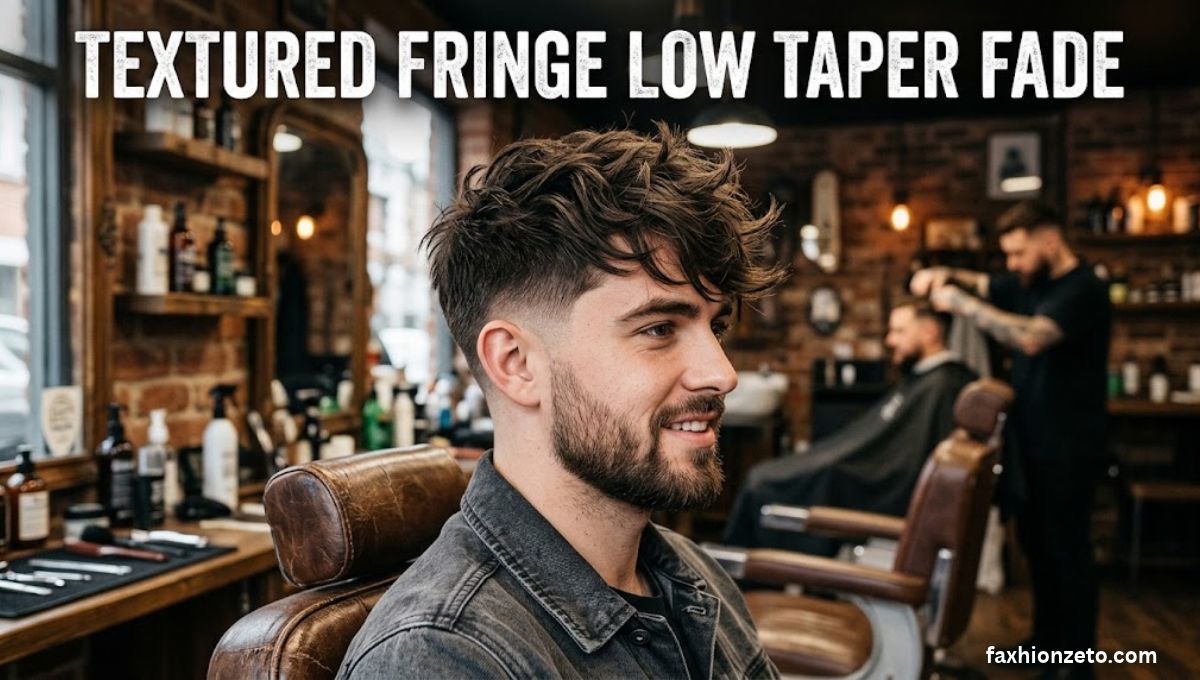
A textured fringe low taper fade is one of the easiest ways to look sharp without trying too hard. The sides stay clean and soft. The top has movement and shape. Together, they make a cut that works at the office, at school, and on the weekend.
Many men want a modern haircut that is neat but not stiff. This style does that. It also grows out well, styles fast, and fits many hair types.
In this guide, you will learn what a textured fringe low taper fade is, which versions look best, and who should get it. You will also get a simple script for your barber, a daily styling routine, product picks, and a list of mistakes to skip. Let’s start with the basics.
What Is a Textured Fringe With Low Taper Fade?
A textured fringe low taper fade is a men’s haircut with two parts. The first part is the fringe. The second part is the low taper on the sides and back.
The fringe is the hair at the front of the top. It is brought forward so it falls over the forehead. “Textured” means the ends are broken up. The hair is not one blunt line. It looks piecey, soft, and a little messy on purpose.
The low taper is the gradual shortening of hair near the bottom of the head. It starts low, near the ears and the back of the neck. The hair gets shorter as it goes down. The change is soft and slow.
The Quick Answer
A textured fringe with a low taper fade is a short-sided haircut with a choppy, forward-falling top. The sides blend from longer hair to very short hair only around the ears and neckline. The result looks clean, natural, and easy to wear.
Taper Fade vs. Regular Fade

People often mix up a taper and a fade. A taper changes the hair length a little. It leaves more hair on the sides. A fade drops down much shorter, often to the skin.
When you add “low,” the blend stays near the ears and neckline. That is why this cut looks soft. It frames the face without a hard line.
Why This Cut Is Popular
Three things make this haircut stand out:
- It looks neat without looking stiff.
- It works with natural hair texture.
- It needs less upkeep than a high skin fade.
The textured fringe low taper fade also fits the move toward natural, relaxed grooming that many barbers see in 2026. Men want hair that looks styled but not forced. This cut does that well.
Best Textured Fringe With Low Taper Fade Styles

The same base cut can look different on each person. Hair type, top length, and fade height all change the final look. Here are eight of the best versions to show your barber.
Textured Fringe With Low Taper Fade for Straight Hair
Straight hair can look flat. Texture fixes that. Your barber can use point cutting to break up the ends. This adds shape and gives the fringe some lift.
Keep the top about 2 to 4 inches long. Use matte clay or texture powder to add grip. Straight hair holds a messy look well once it has some product in it.
On straight hair, a textured fringe low taper fade looks sharp and clean. It is also the easiest to style in a few minutes.
Read More: Low Taper Fade for Boys With Straight Hair
Textured Fringe With Low Taper Fade for Curly Hair
Curly hair already has natural texture. You do not need to add much. The goal is to shape the curls, not fight them.
For a textured fringe low taper fade on curly hair, ask for a longer top, about 3 to 5 inches. The low taper keeps the sides tidy. That way, the curls get the spotlight.
Use a light curl cream while the hair is damp. Then let it air dry or use a diffuser. Curly hair shrinks as it dries, so ask your barber to leave a little extra length.
Textured Fringe With Low Taper Fade for Asian Hair

Asian hair is often thick, straight, and strong. It can stick out at the sides or look heavy on top. A low taper helps keep the sides flat and neat.
A good barber will thin out the top with texturizing shears. This removes weight and lets the fringe move. A slightly longer fringe also looks great, since thick hair holds its shape well.
Use a strong matte product. A textured fringe low taper fade on thick hair needs a firm hold to keep the texture all day.
Low Taper Fade With a Textured Top
This is the classic version. The top is cut with layers. It has a messy, lived-in look, and the sides stay clean.
It works for almost any hair type. You can keep the top short for a low-effort look. You can also grow it longer for more volume.
This style is a good place to start if you have never tried a taper before. It is safe, simple, and easy to grow out.
Textured Fringe With a Blowout at the Back
This version adds volume. The top is blow dried upward and forward. That gives the fringe a full, airy look.
The back and sides still have a soft taper. The mix of volume on top and clean sides gives a strong shape. It looks bold, but it still feels modern and balanced.
Use a lightweight mousse before blow drying. Then add a small amount of texture powder. It keeps the volume from falling flat by noon.
Textured Fringe With a Mid Taper Fade

A mid taper starts higher than a low taper. It begins around the middle of the sides. That gives you more contrast between the top and the sides.
This version looks a bit sharper. It also shows more skin around the ears. Pick it if you want a cleaner, bolder frame for your face.
If you cannot decide, try the low version first. You can always go higher at your next visit.
Textured Fringe With a Low Fade
A low fade is a bit shorter than a low taper. The hair near the ears and neck goes closer to the skin. The line looks crisp but still soft.
This is a nice step up if the taper feels too gentle. You get more edge, but not as much as a mid fade or high fade.
The fringe stays the same. Choppy, forward, and full of texture.
Textured Fringe With a Classic Taper Fade
A classic taper follows the natural hairline. It leaves the sides a bit longer, then cuts shorter at the neckline. It does not go to the skin.
This is the most formal version. It looks clean in a suit or a school uniform. The fringe can still be messy, but the sides stay neat.
It suits men who want a polished look at work with a hint of style on top.
Why Choose a Textured Fringe With a Low Taper?

There are many good haircuts. So why pick this one? Here are the main reasons.
It Looks Good on Many People
The low taper is soft. The fringe is flexible. Together, they make the textured fringe low taper fade a good fit for many face shapes and hair types. Barbers can change the length and the texture to fit you.
It Grows Out Well
A high skin fade looks stale after two weeks. The low taper does not. Because the hair on the sides is not cut to the skin, the growth looks gradual. You can stretch visits to the barber a little longer.
It Is Easy to Style
Texture does most of the work. You do not need to comb or slick the hair. A few minutes with clay or spray is enough. The messy look is part of the style.
It Works in Many Settings
The sides stay neat, so the cut looks fine at work. The top has some personality, so it looks relaxed on weekends. This balance is why it is called a professional and casual hairstyle.
It Can Hide Small Flaws
A fringe can soften a large forehead. A low taper can slim a round face. Texture can hide thin spots. Small details like these are why barbers often suggest this cut.
Who Should Get This Haircut?
Most men can wear a textured fringe low taper fade. Still, some groups will love it more than others.
- Students and teens: It is neat, trendy, and easy to manage. Most school dress codes allow it.
- Office workers: The sides look clean. The top adds personality without breaking rules.
- Men with busy mornings: It takes about five minutes to style.
- Men with thick hair: Texturizing removes weight and adds shape.
- Men with wavy or curly hair: The cut works with natural movement.
- Men who want a fresh look: It is a simple upgrade from a basic short cut.
There are a few cases where you may want a different cut. If your hair is very thin on top, a longer fringe may show your scalp. If you have a strong cowlick at the front, a forward fringe may fight you. Talk to your barber first. They can adjust the length or the direction.
Best Face Shapes for a Textured Fringe

Face shape matters. The right fringe length and fade height can balance your features. Here is how this haircut works with each shape.
Textured Fringe for Oval Faces
Oval faces are balanced. A textured fringe low taper fade looks good in almost any length. You can go short, medium, or messy. A low taper keeps the shape clean.
If you have an oval face, you have the most freedom. Try different lengths and see what you like.
Textured Fringe for Round Faces
Round faces are wide and soft. The goal is to add height and angles. Keep the sides tight with a low taper. Add volume on top and sweep the fringe slightly to the side.
Avoid a thick, heavy fringe that sits straight across. It can make the face look even rounder.
Textured Fringe for Square Faces
Square faces have a strong jaw and a wide forehead. A textured fringe softens those lines. Choose a medium length fringe that falls a little forward.
The low taper keeps the jaw clean. It lets your strong features stand out without looking harsh.
Textured Fringe for Long and Heart-Shaped Faces
Long faces need less height. Keep the top shorter and add width with texture. A fringe that falls forward helps cut the look of a long forehead.
Heart-shaped faces have a wide forehead and a narrow chin. A medium fringe that sits just above the brow balances this. A low taper adds a bit of weight near the jaw, which helps the whole look.
How to Choose the Right Fringe for Your Hair Type
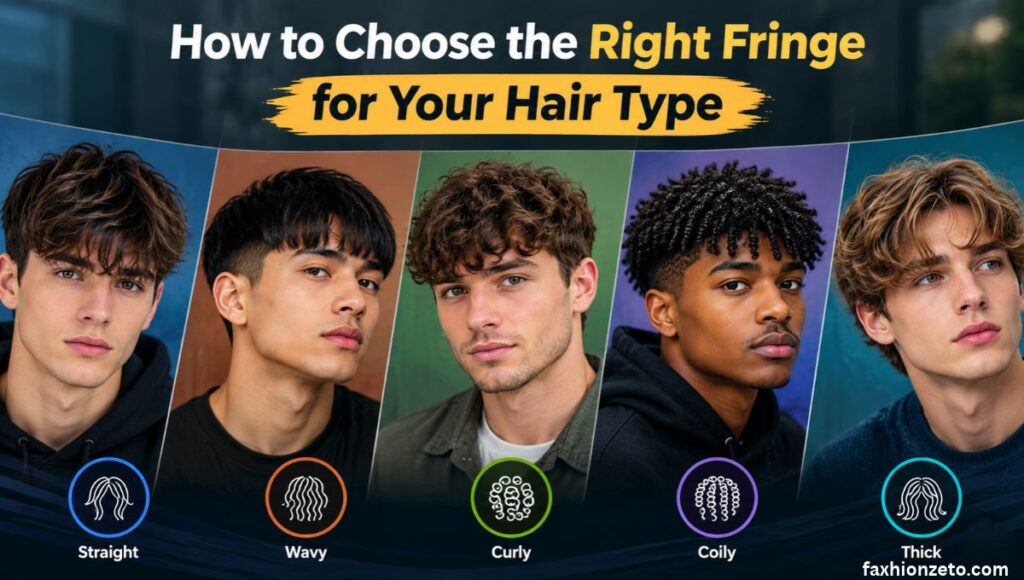
Hair type changes how a fringe behaves. The same cut can look totally different on two men. Here is how to pick the right version for your hair.
Straight Hair
Straight hair is smooth and shiny. It can fall flat. Ask for layers and point cutting. Use texture powder or sea salt spray to add grip.
A fringe about 2 to 3 inches long works well. It holds its shape and does not drag down.
Wavy Hair
Wavy hair is the best base for this cut. It already has movement. A low taper keeps the sides neat, and the waves add natural texture to the fringe.
Use a light cream or a bit of sea salt spray. Scrunch the hair, then let it dry. Do not over-comb it.
Thick Hair
Thick hair can look bulky. Ask your barber to remove weight with texturizing shears. This lets the fringe move and stops it from puffing out.
Keep the sides tapered tight. A low taper stops thick hair from flaring around the ears.
Fine or Thin Hair
Fine hair needs volume. Ask for a shorter fringe and a few light layers. Too much thinning will make it look sparse.
Use a lightweight mousse at the roots. Add a pinch of texture powder to build body. Skip heavy pomades because they weigh fine hair down.
Curly Hair
Curly hair needs moisture and shape. Ask for a longer top so the curls can form. Taper the sides low and clean.
Wash with a gentle shampoo. Apply a curl cream while the hair is damp. Let the curls dry on their own or use a diffuser.
Short, Medium, and Messy Textured Fringe Variations
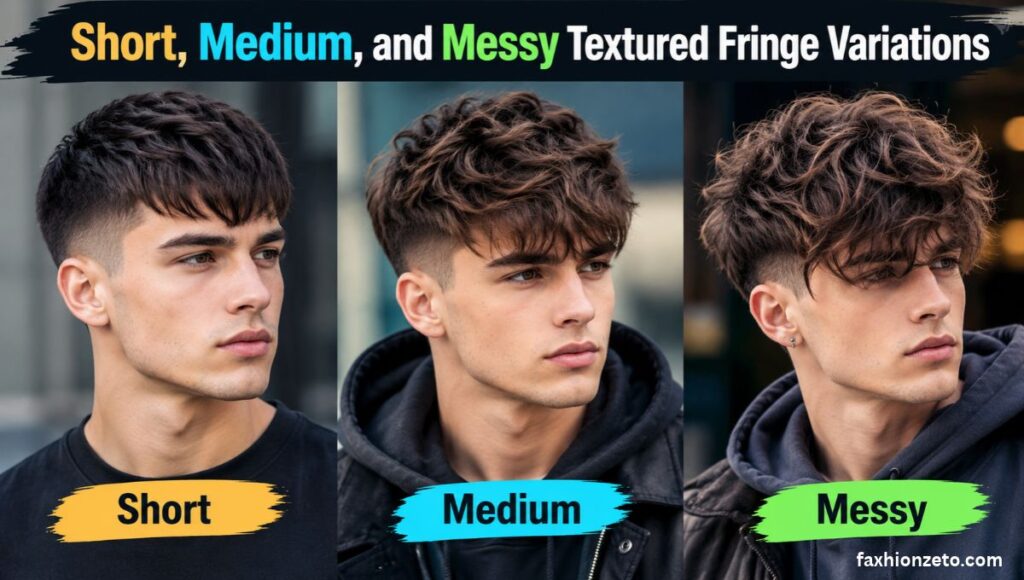
The length of your fringe changes the whole mood of your textured fringe low taper fade. Here are three common versions.
Short Textured Fringe
A short textured fringe sits about 1 to 2 inches long. It is neat and easy. It stops just above the brow and works well with a low taper.
This version suits men who want a quick, low-effort style. It also works for thin hair and warm weather.
Medium Textured Fringe
A medium fringe is about 3 to 4 inches long. It falls over the forehead and can be pushed to the side. It gives you more ways to style.
This is the most popular length. It shows off texture and gives you room to experiment.
Messy Textured Fringe
The messy version is loose and relaxed. The ends are choppy. The hair falls in different directions. It looks like you just woke up, but in a good way.
Use sea salt spray and fingers. Do not use a comb. The goal is natural movement, not a perfect shape.
How to Ask Your Barber for a Textured Fringe Low Taper
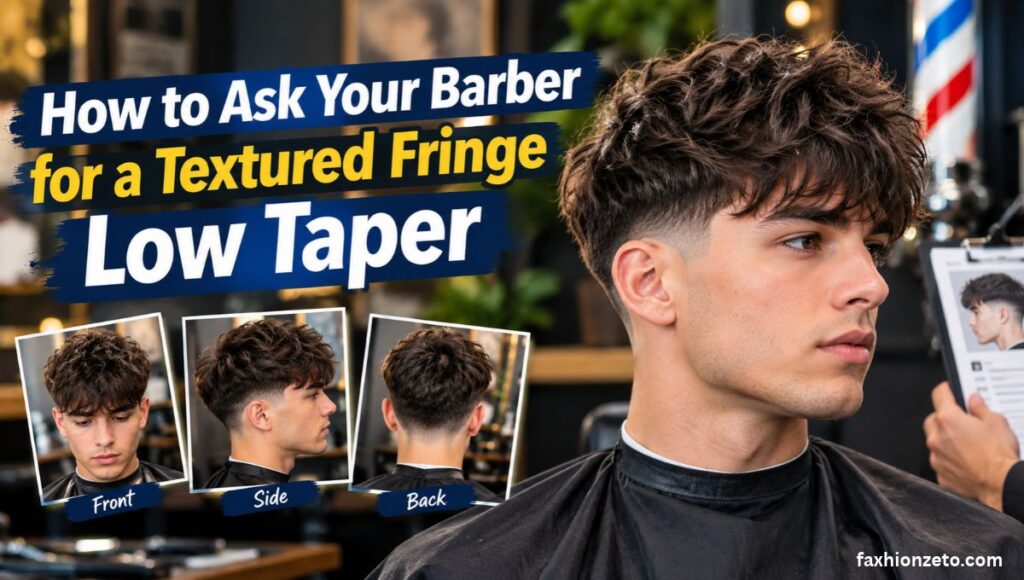
Most bad haircuts come from poor communication. A short, clear request for a textured fringe low taper fade can fix that. Here is a simple plan.
Step-by-Step Barber Script
- Name the cut. Say, “I want a textured fringe with a low taper fade.”
- Describe the sides. Say, “Start the taper low, near the ears and neckline.”
- Say how short. Ask for a number or show a length. For example, “Go to a number 1 at the bottom, then blend up.”
- Describe the top. Say, “Leave 3 inches on top and add texture with point cutting.”
- Explain the fringe. Say, “I want it to fall forward, just above my eyebrows.”
- Mention the neckline. Ask for a clean, natural neckline, not a hard block.
Bring Reference Photos
A photo is worth a thousand words. Show two or three pictures from different angles. Pick photos of men with similar hair to yours.
A front photo does not show the sides. So also bring a side and a back photo. Then name the taper height yourself.
Useful Words to Know
- Point cutting: Cutting into the ends at an angle to add texture.
- Texturizing shears: Scissors that remove weight from thick hair.
- Razor cutting: Using a razor to create soft, feathered ends.
- Blend: The smooth change between long and short hair.
- Neckline: The shape at the back of the neck.
Ask Questions Too
A good barber will talk with you. Ask what will work for your hair type. Ask how to style it at home. If you feel unsure, ask for a slightly longer cut. Hair can be cut shorter later, but it cannot be glued back on.
How to Style a Textured Fringe at Home
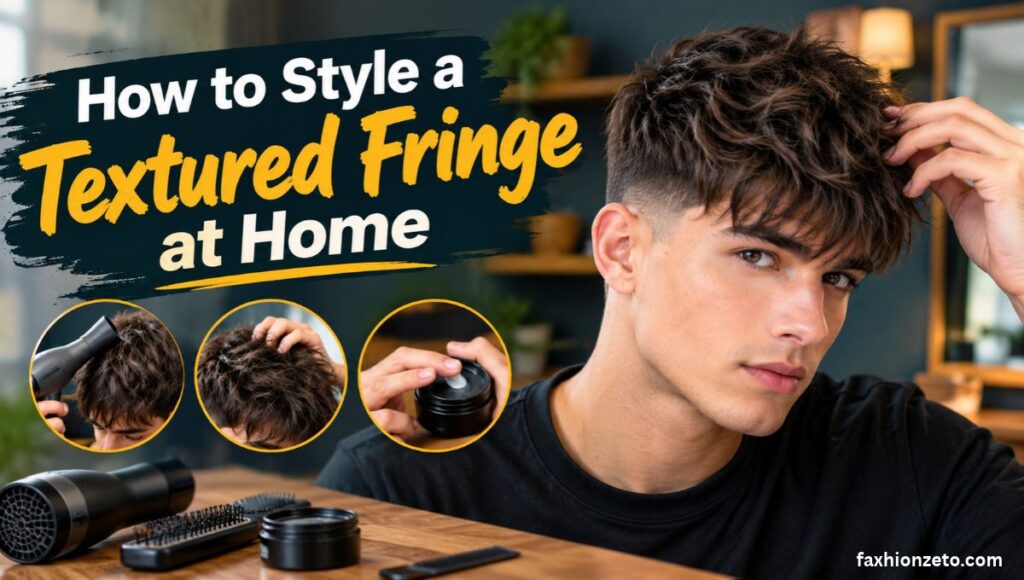
Styling a textured fringe low taper fade takes about five minutes. Here is a simple routine.
Step 1: Start With Clean, Damp Hair
Wash your hair, then towel dry it. Leave it slightly damp. Styling works best on damp hair, not soaking wet hair.
Step 2: Add a Prep Product
Apply sea salt spray or a lightweight mousse. Spray it from root to tip. This adds grip and volume.
Step 3: Blow Dry on Low Heat
Use a hair dryer on low or medium heat. Move your fingers through the hair as you dry. Push the fringe forward and up at the roots.
Low heat protects your hair. It also keeps the texture natural.
Step 4: Add a Matte Product
Rub a pea-sized amount of matte clay in your hands. Warm it up. Work it through the top with your fingers. Start at the back and move forward.
Step 5: Shape the Fringe
Pinch small sections of the fringe. Twist or pull them to make piecey lines. Do not comb. Fingers give a more natural shape.
Step 6: Finish With Texture Powder
Sprinkle a tiny amount of texture powder at the roots. Ruffle it in. This adds volume and holds the style all day.
Quick Styling Tips
- Use less product than you think you need. You can always add more.
- Wash your hair often enough to avoid product buildup.
- Style your fringe in the direction it likes to fall.
- If it looks too neat, ruffle it with your hands.

Best Hair Products for a Textured Fringe
The right product makes a big difference for a textured fringe low taper fade. Here are the best types for this style.
Matte Clay
Matte clay gives strong hold with no shine. It makes the fringe look thick and natural. It is great for straight and thick hair. A pea-sized amount is enough.
Sea Salt Spray
Sea salt spray adds grit and wave. It gives hair a beach-style look. Use it on damp hair before drying. It works well on straight and fine hair.
Texture Powder
Texture powder adds instant volume. It is light and dry. Sprinkle a bit at the roots. It is great for thin hair, since it adds body without weight.
Lightweight Styling Cream
Styling cream gives soft hold and a natural finish. It is best for wavy and curly hair. It adds moisture and keeps frizz down.
Lightweight Hair Mousse
Mousse builds volume at the roots. Apply it to damp hair before blow drying. It is a good choice for fine hair.
Matte Clay vs. Sea Salt Spray
Both give texture, but they work differently. Clay gives hold and thickness. Sea salt spray gives grit and movement. Many men use both. Spray first, then clay on top.
Products to Avoid
- Heavy gels: They make hair stiff and shiny.
- Greasy pomades: They weigh down fine hair.
- Too much hairspray: It can make hair crunchy.
How Often Should You Trim a Low Taper Fade?

Most men should trim the sides of a textured fringe low taper fade every 3 to 4 weeks. That keeps the taper clean and the neckline sharp. If you like a very crisp look, go every 2 to 3 weeks.
The top can wait longer. Trim the fringe every 6 to 8 weeks. Or sooner if it starts to cover your eyes.
Here is a simple schedule:
- Week 2: The taper still looks fresh.
- Week 3: The neckline starts to grow in.
- Week 4: Time for a touch-up.
- Week 6 to 8: Time to reshape the top and fringe.
Between visits, you can clean the neckline and sideburns with a trimmer. Go slowly and take off very little. Never try to re-cut the taper yourself.
The low taper grows out better than a skin fade. If you miss a week, it still looks neat. That is one of its best traits.
Common Textured Fringe Haircut Mistakes to Avoid
A few small errors can ruin a good textured fringe low taper fade. Here is what to avoid.
1. Using Too Much Product
More product does not mean more style. Too much clay makes hair look heavy and greasy. Start small.
2. Over-Texturizing the Top
Too much thinning can leave the fringe sparse. This is a common issue with fine hair. Ask your barber to texture lightly.
3. Cutting the Fringe Too Short
A fringe that is too short will not fall forward. It will stick up. Leave enough length to style.
4. Ignoring Your Hair Growth Pattern
A cowlick can push the fringe in the wrong direction. Tell your barber about it. They can cut with the growth, not against it.
5. Choosing the Wrong Fade Height
A fade that is too high can look harsh. A low taper is softer and safer. Pick the height that matches your face and your style.
6. Skipping Regular Trims
A taper that grows out looks messy fast. Stick to your schedule.
7. Using Heavy Heat
High heat damages hair and dries it out. Use low or medium heat when blow drying.
8. Not Washing Out Product
Product buildup makes hair dull and flat. Wash it out regularly with a clarifying shampoo.
9. Bringing the Wrong Reference Photo
If the photo shows a different hair type, the result will not match. Choose a model with hair like yours.
Frequently Asked Questions
Is a Textured Fringe With Low Taper Fade Good for Straight Hair?
Yes. Texture adds shape and volume to straight hair. Point cutting and matte clay help it hold the messy look.
How Long Should a Textured Fringe Be?
Most fringes are 2 to 4 inches long. Short ones sit at 1 to 2 inches, and curly styles can go to 5 inches.
What Fade Works Best With a Textured Fringe?
A low taper is the softest and most popular choice. A low fade or mid taper gives a sharper look.
Can I Get a Textured Fringe With a Low Taper?
Yes. Most barbers can cut it. Bring a reference photo and say “low taper” and “textured fringe” clearly.
What Is a Low Taper Fade Fringe?
It is a haircut with a gradual low taper on the sides and a fringe that falls over the forehead on top.
How Often Should I Trim a Low Taper Fade?
Every 3 to 4 weeks keeps the sides neat. You can wait up to 6 weeks for the top.
Is a Textured Fringe Difficult to Style Every Day?
No. It takes about five minutes. A bit of clay or sea salt spray and your fingers is all you need.
What Haircuts Can Make You Look Older?
Very thin tops, receding styles, and flat, dull cuts can age you. A fresh, textured cut with full volume usually looks younger.
Conclusion
A textured fringe low taper fade is simple, modern, and flexible. It works with many hair types and face shapes. It looks clean at the office and relaxed on the weekend.
Pick the version that suits your hair. Bring clear photos to your barber and use the script above. Style it with light products and a quick routine. Trim the sides every few weeks.

Isaac Flynn is a fashion writer and content researcher at Faxhionzeto.com. He focuses on fashion trends, styling ideas, clothing guides, and modern wardrobe inspiration. With an interest in visual culture and fashion journalism, Isaac creates practical, reader focused articles that turn evolving style ideas into clear, useful information for everyday fashion enthusiasts.