

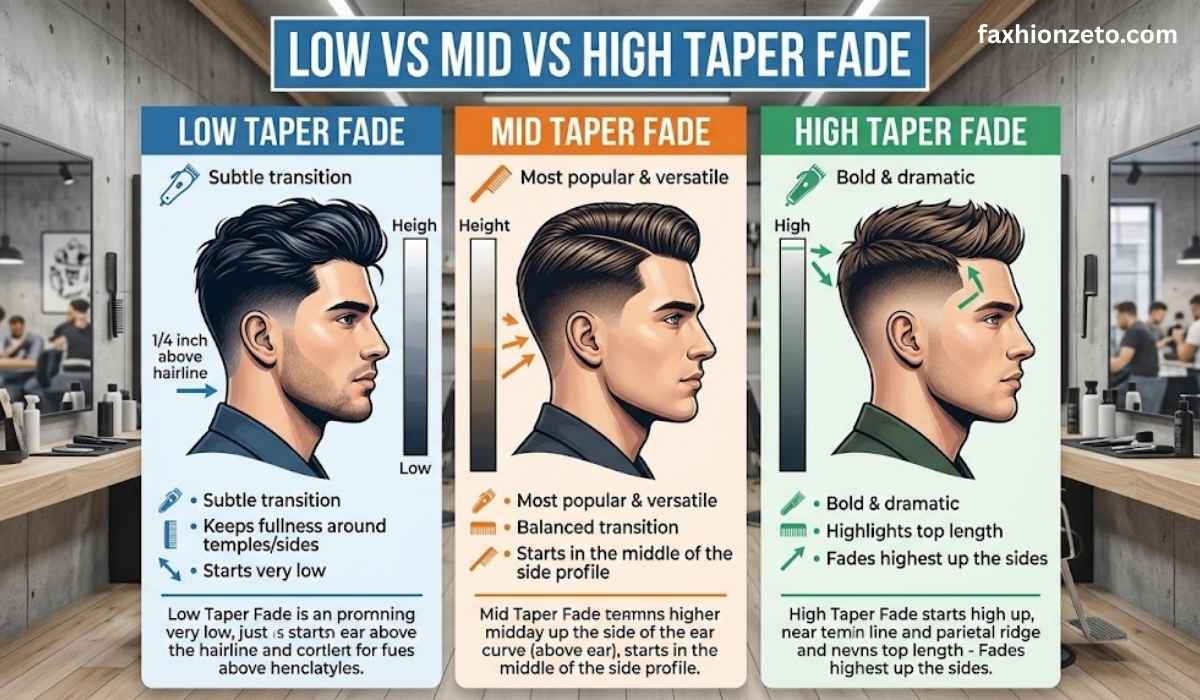
Picking a taper fade sounds easy until the barber asks how high you want it. Low, mid, or high? The choice changes your whole look. This guide breaks down low vs mid vs high taper fade in plain words. You will learn how each cut looks, who it suits, and how to style it. You will also get simple tips for talking to your barber. By the end, you will know exactly what to ask for.
Quick answer: The main difference in a low vs mid vs high taper fade is where the shortening starts. A low taper starts near the ears and neckline. A mid taper starts around the temples. A high taper starts higher on the sides, near the top of the head. The higher the taper, the bolder and cleaner the look.
What Is a Taper Fade Haircut?

A taper fade haircut keeps more length on top and gets shorter toward the sides and back. The change happens slowly. That is why the cut looks neat and clean.
Unlike a bold skin fade, a taper often leaves a little hair at the bottom. It stays soft and easy to wear. Most taper fades focus on the sideburns and the neckline. Barbers use clippers and guards to blend the lengths.
Because the shift is gentle, this cut works at the office, at school, and on weekends. It is also why many men see it as a safe, sharp choice.
Low Taper Fade Explained
A low taper fade starts just above the ears and follows the natural hairline. It shortens the hair around the sideburns and the back of the neck. The rest of the sides stay longer.
This gives the softest look of the three. A low taper fade haircut suits men who want a tidy shape without a big change. It also grows out well. You can wait a few weeks before your next visit.
It works for office jobs, school, and any place with a strict dress code. It also pairs nicely with longer tops and fuller beards.
Mid Taper Fade Explained
A mid taper fade starts around the temple area. It sits halfway between the low and high options. The shorter zone is bigger, so the contrast is easier to see.
A mid taper fade haircut looks modern but still balanced. It works on most head shapes. That makes it a smart pick if you are unsure.
Many men choose it because it looks fresh without feeling extreme. It also works well with a textured crop, a quiff, or a short pompadour. Expect to visit your barber every three to four weeks to keep the shape clean.
High Taper Fade Explained
A high taper fade starts higher up on the sides, close to the top of the head. The shortest hair sits well above the ears. This creates strong contrast between the sides and the top.
The look is bold and sharp. A high taper fade haircut shows off the shape of your head, so it helps to know your head shape first. It suits men who like a clean, athletic look.
It needs more upkeep. The short area grows out fast, and the line loses its edge. Many men book a trim every two to three weeks.
Low vs Mid vs High Taper Fade at a Glance
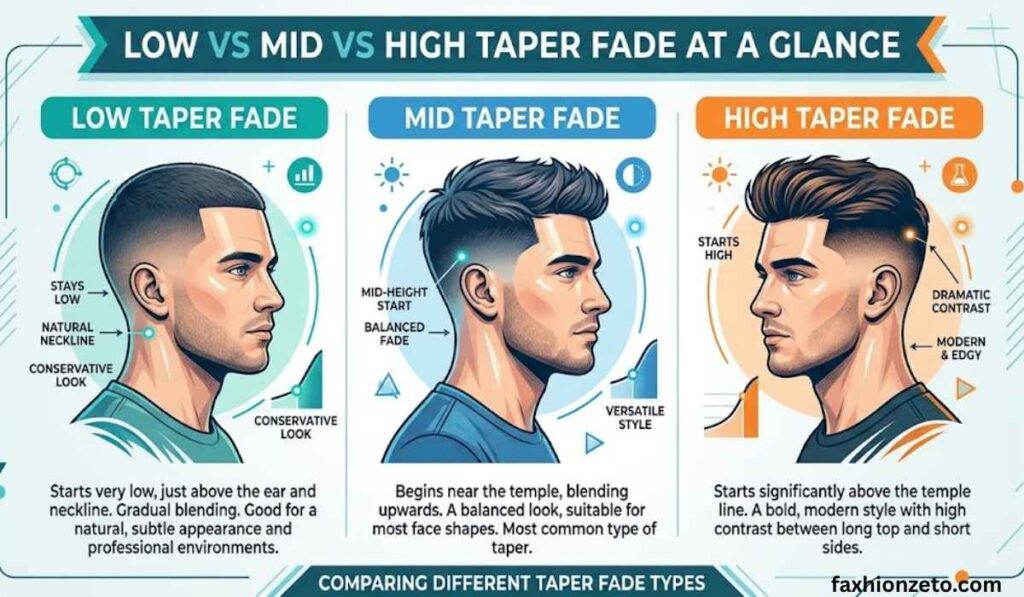
Use this table to compare all three cuts quickly.
| Feature | Low Taper | Mid Taper | High Taper |
| Starts at | Just above the ear | Around the temple | Near the top of the head |
| Look | Soft and neat | Balanced and modern | Bold and sharp |
| Contrast | Low | Medium | High |
| Upkeep | Every 4 to 5 weeks | Every 3 to 4 weeks | Every 2 to 3 weeks |
| Best for | Work, school, first timers | Most men | Men who want a strong look |
Low vs mid taper fade is a small step up in contrast. Mid vs high taper fade is a bigger jump. The low vs high taper fade gap is the widest. Low is quiet. High is loud. Mid sits in between.
Taper Fade vs Skin Fade
Both cuts blend short hair into longer hair. The difference is how short they go.
A taper fade usually stops at a short length and keeps some hair at the neckline. A skin fade goes all the way down to bare skin. That makes it stronger and more dramatic.
Words get mixed up here. Taper fade vs mid fade and taper fade vs low fade both come down to the same idea. A mid fade or low fade names the height. A taper names the softness.
Barbers use these terms in slightly different ways. So bring a photo to avoid a surprise.
Which Taper Fade Suits My Face Shape?
There is no single best taper fade for men. The right one depends on your face and head. Use these as starting points, not strict rules.
- Round face: A high or mid taper adds height and makes the face look longer.
- Square face: A low or mid taper keeps the strong jaw in focus without too much edge.
- Oval face: Most heights work. Pick the one that fits your style.
- Long face: A low taper avoids adding more height. Keep the top tidy.
- Heart-shaped face: A low or mid taper adds balance near the jaw.
Head shape and ear size matter too. Ask your barber to check for bumps or flat spots before going high.
Best Taper Fade for Different Hair Types

Your hair type changes how the cut looks. Here is what to expect.
Straight Hair
A taper fade for straight hair looks smooth and crisp. Straight hair lies flat, so the blend shows clearly. Leave enough length on top to style with a comb and a little product.
Thick Hair
A taper fade for thick hair removes bulk from the sides. Thick hair can puff out over the ears. A mid or high taper keeps the sides slim. Your barber may also thin the top slightly.
Curly Hair
A low taper fade with curly hair keeps the top full and defined. A mid taper fade with curly hair adds more shape. A high taper fade with curly hair gives strong contrast against the curls. Keep curls moisturized so they do not frizz.
Waves and Textured Hair
A low taper fade with waves keeps the pattern neat and shows off your waves. A mid taper fade with textured hair adds body and separation on top. A high taper fade with short hair looks clean and sharp, even when the top is only an inch or two long.
Taper Fade with a Beard
A taper fade with a beard looks polished when the two blend together. The barber fades the sideburns into the beard. This makes one smooth line from head to face.
A low taper works well with fuller beards. A mid taper suits short beards and stubble. Keep the beard edges sharp. Trim the neckline and cheek line often. Use beard oil or balm to keep the hair soft.
Ask for the fade to meet the beard at the same point. That way, no gap shows.
Taper Fade with a Line Up
A line up gives the cut crisp edges. The barber shapes the hairline at the forehead and temples with a trimmer. A taper fade with a line up looks sharp at all three heights. It is popular with waves and curls.
Keep in mind that a line up fades fast. It needs a touch up every week or two.
Do not ask for the hairline to move back too far. A very hard line can look harsh and make the forehead look bigger. Tell your barber to keep the shape natural.
Taper Fade Styles to Try

The fade is only half the cut. The top decides the style.
- Textured fringe: A taper fade with textured fringe works well with a low or mid taper. The top is cut choppy and forward. Add clay for a messy look.
- Quiff or pompadour: A mid or high taper gives lift and clean sides.
- Crew cut or short crop: These work with any height and need little styling.
- Slick back: A low taper keeps the look neat and grown up.
How to Ask a Barber for a Taper Fade
Once you pick from the low vs mid vs high taper fade choices, clear words prevent bad haircuts. Follow these steps.
- Bring two or three photos. Show the front, side, and back.
- Say the height: low, mid, or high taper.
- Say how short you want the bottom: soft or close.
- Tell the barber how much to leave on top.
- Mention your beard or line up if you want them.
- Ask which guard sizes were used, so you can repeat the cut next time.
You can say, “I want a mid taper fade, blended into my short beard, with a natural line up.” Keep it simple.
How to Style and Care for Your Taper Fade
Good care keeps the cut fresh between visits.
Use a small amount of product. Matte clay or paste gives texture. Pomade adds shine and hold. Curly hair does well with a light cream. Sea salt spray adds grip to fine or straight hair.
Short sides show dry flakes easily. A gentle shampoo and a light moisturizer can help.
Avoid these common mistakes:
- Waiting too long between trims
- Using too much product
- Skipping the neckline cleanup
- Choosing a height that does not suit your head
FAQs
Which is better in a low vs mid vs high taper fade?
None is better for everyone. Low is soft and easy. Mid is balanced. High is bold. Pick based on your head shape, hair type, and dress code.
How often should I trim a taper fade?
Most men visit every two to four weeks. A high taper needs trims more often. A low taper can wait a little longer.
Is a taper fade good for work?
Yes. A low or mid taper looks clean and professional. It keeps a neat shape without looking too edgy.
Does a taper fade work on curly hair?
Yes. It keeps the curls on top and tidies the sides. Choose the height based on how much contrast you want.
How long does a taper fade take to grow out?
A low taper grows out gently and looks fine for a few weeks. A high taper loses its sharp shape sooner. Trim timing depends on how fast your hair grows.
Conclusion
The right cut comes down to your style, hair, and daily life. Choosing among a low vs mid vs high taper fade is easier when you know the basics. Go low for a soft, work-safe look. Go mid for balance. Go high for a bold, sharp finish. Bring photos, use clear words, and keep up with trims. Try one height, see how it feels, and adjust next time. Your barber can guide you from there.

Isaac Flynn is a fashion writer and content researcher at Faxhionzeto.com. He focuses on fashion trends, styling ideas, clothing guides, and modern wardrobe inspiration. With an interest in visual culture and fashion journalism, Isaac creates practical, reader focused articles that turn evolving style ideas into clear, useful information for everyday fashion enthusiasts.